Beth and I frequently talk about how we miss the North Sea. We lived on the coast and I think it is our nature that we both prefer its unique countryside. But now that we’re living in East Midlands, landlocked and busy at university, we haven’t been back for a couple of years. So for our summer holiday we’ve travelled to North Norfolk, a place that for many reasons became an adopted home for both of us, to smell the sea again and enjoy the beautiful sights.
It may perhaps sound a bit mawkish, but in many ways North Norfolk provided an opening for discovery, not just in a literal sense but also in a philosophical sense as a space to reflect on the world of ideas. There is a line by John Berger that speaks of a place from which the world can be discovered – that is, a foundation from which one can venture forward but always return if needed. I think this is what the North Norfolk countryside came to represent for us: at the time a much needed place of peace and calm, but also a place of thought and reflection, where time runs slow and where we could gather ourselves, find our footing in life, and sometimes spend entire afternoons contemplating life. If for Plato and Socrates our true home is the eternal world of ideas, the North Sea, with the calm and quiet nature of the hills, valleys, woodlands, and beaches unfolding alongside it, is the continuum from which philosophy and mathematical realism can be pursued. Its the total landscape, the geography, and the open horizon that is grounding.
The little cottage where we used to live, just off the main road which the Romans would have similarly ventured when travelling to the coastal towns, was our first proper home. It was maybe the first place where we both found lasting comfort, coming from difficult situations and experiences. It was modest accommodation – a flintstone cottage, with an old fireplace, pinewood shelves, and steep narrow stairs sharply turning from the kitchen at the back up to the bedroom facing the main road. It was a tiny dwelling, perhaps a bit too cramped at times. But with our library of books, regular philosophical discussion, and no shortage of slow days of reflection, maths, and hobby, it was the perfect place at the right time. On the most difficult days, we could just listen to the birds in the back garden, find peace in our thoughts, or write to our contentment.
The main town, Holt, the origin derived from the Anglo-Saxon word for ‘wood’, is a place defined very much by its surrounding line of trees and small forest areas. It is situated on a hill, and, although a couple miles from the coast, a fresh sweeping wind from the North Sea can often be felt. Out here, the air is fresh. Space is wide and open.
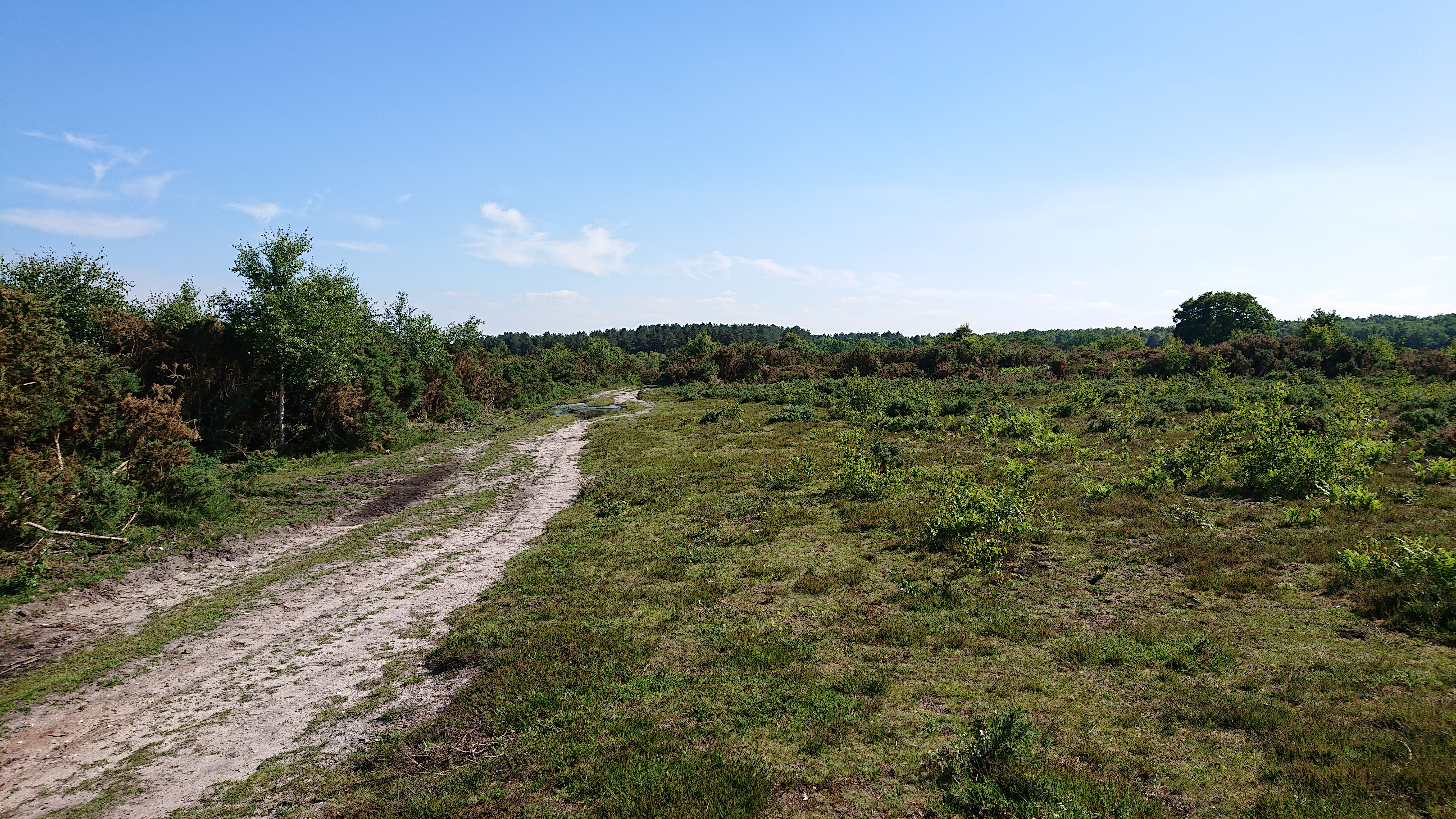
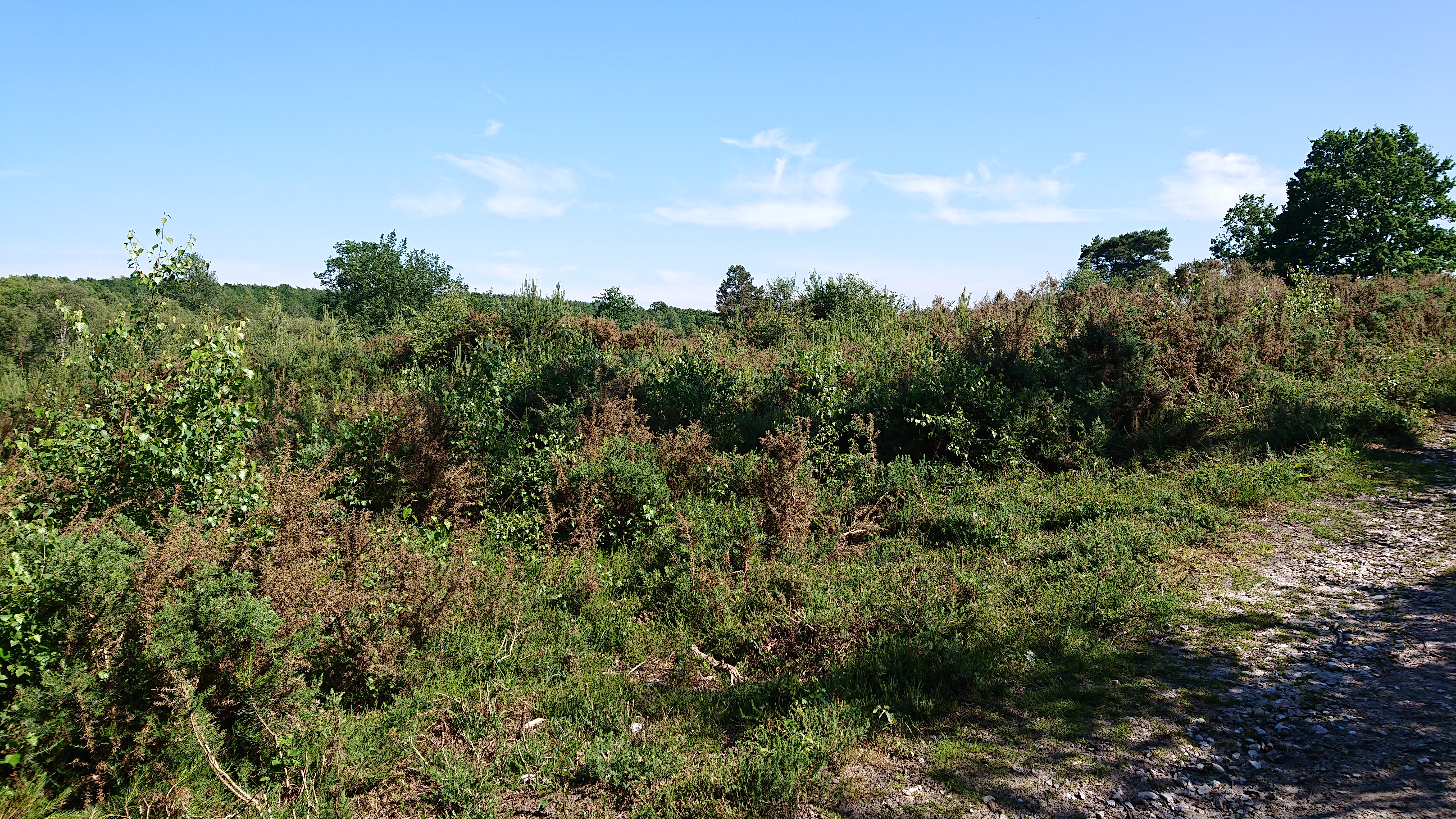
One of my favourite places was, and remains to be, the woodland and heath not far from where we lived. It’s not marked on the map, so it is truly a hidden place to be discovered. Beth and I would take regular walks and spend many afternoons sitting among the heather – purple flowers of Calluna vulgaris – and yellow flowers of Ulex gallii. One year, I remember wild ponies were introduced to help maintain the land, and often we would see them hanging out by the brook or underneath a tree on a hot summer day. Upon our return this week, it was a joy to visit this place again.

I’m not very good at creative writing, although I’ve tried to learn and experiment with it. One thing that we used to do is, during our walks in the heath or through the many wonderful nature reserves, we would treat them like field expeditions. And, like a keen biologist or natural scientist, we would take our time for the finer inspection of all species of plant and animal. I would practice writing in my journal in an observational and documentative way. Being back here, I was inspired to dig up one such piece of writing. At the time I was experimenting with phenomenological-style notetaking, trying to intricately describe my experience of the countryside. I think I also took inspiration from the structure of a number of writings by various authors that I was reading back then.
To the left of me dense thicket carries into the distance, a rolling plain of healthy evergreen and intricate pathways of rotting needle, brown and dank, align in close order row upon row upon row. To the right, at the nearest edge of the forest, golden rays of sunlight spray across an open valley. Its radiating warmth and all-consuming light illuminate the young grasses breaking into the soil, filling the land with a rich, unfolding spectacle of colour. Looking beyond these trees, it is readily noticeable that there is an abundance of wildflower and bracken, a diverse quality of dazzling tones and subjects, which harmonize in a single unified phenomenal pallet like one massive, entanglement of earth. Ramshackle and unexpected, diverse and revealing, from endless rills and rivulets, from ditches to dells, from hedgerows to underbrush, with each new experience pressing deeper into this landscape and, ever from the background of this vast horizon of rolling hills before me, entire swells of breathing life continuing to reveal themselves. From the rabbits and wood pigeons who rather be hidden; the swaying fields are a thoroughfare for creatures of various kinds, from field mice to deer and the odd passing fox; song thrush, jays, long-tailed tits, and spotted woodpeckers - what grows and lives in this place is truly possessed of a beauty all its own.

As for the very belly of the forest, off the heath, there is a rich vision of evergreen, each swirling pine looks entirely similar to the other. But upon closer inspection we see that each particular pine tree is distinguishable and, indeed, of unique character. The pine itself is of course home to many things. Birds, insects, a peering squirrel; all find comfort in these dense woodlands. But row upon row, with its dwarf shoots that spiral from off the axils of scaly bracts, such a dense growth of pine, whose intricate branches are like a massive conic arrangement of narrow needles bundled together by both bark and sap, is a marvel in itself.  Occasionally stepping on fallen seed or the coned fruit, my senses are overwhelmed by the spatially sweet and particular fragrance that lingers throughout the air.
The countryside here is in many ways a place of Tolkein description. It has been nice sitting again by the cliffs and walking through the overgrown footpaths. As I tried to capture, it is Shire-like in its beauty. With its salt marshes; winding roads lined by hedges, wild flowers, sedges, and rushes; and rolling hills demarcated by broad leaved woodland, towering at times with veteran oaks, birch, and, my favourite, Scotch pines – there is so much to be admired in this part of the country. Down by the sea, fishermen sit with lines cast, birds circling overhead. Again, it is perhaps more than a bit mawkish, but it is for me one of the places in our beautiful country that speaks a bit to old Romanticism, with every brook and winding turn outlined by hedgerows evoking a scene from a classic Keats poem.
It is my nature to be reclusive. No doubt, there are many other reasons why I find home by the sea and in the countryside. But as I write from the cottage where we’re staying, I remember why North Norfolk represents more than a place of stillness and beauty. With a cup of tea and some maths by the window, in the quiet thoughtfulness, the appearance and seeming order of the world of phenomena, mental idealisations or not, rushes forth some profound reality.