The other day I had an overwhelming itch to read something a bit more experimental and perhaps even slightly avant-garde. There is a shelf on one of my bookcases that houses a number books that fall under this category. One will find the likes of Ulysses by James Joyce, Waiting for Godot by Samuel Beckett, and the entire collection of novels by Leonard Cohen, to name a few. I am incredibly fond of them all. On this occasion I wanted to read something new, and with my experimental itch I turned to another shelf on a different bookcase, which houses an assortment of books categorised as “desperately wanting to read but only at the right time”. Two books caught my eye, Piranesi by Susanna Clarke next to Jonathan Strange & Mr. Norrell by the same author.
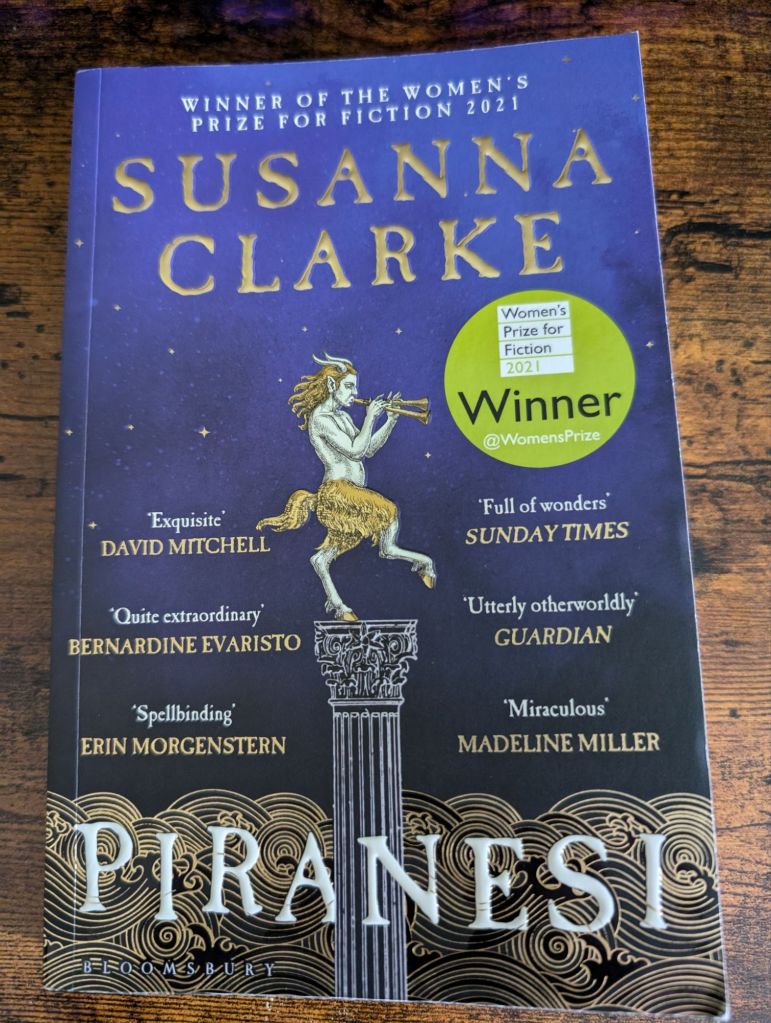
I picked up Piranesi and 100 pages later struggled to put it down. I have since finished the book, and, I must say, from start to finish I thoroughly enjoyed it.
Piranesi is as magical as it is haunting. I can think of no better words. As a whole, it represents a sort of delicate counter-balancing in what I would often associate with modern, and certainly at times post-modern, literature soaked especially in experimental freedom and in this case doused with extra flavours of fantastical realism. To name a genre, I would say the book falls under speculative fiction with magnificent shades of absurdism and surrealism. It very much reminded me of some of the classic, slightly surreal existential novels of old; there is indeed more than a kernel of philosophical meditation in its pages, especially of the epistemological sort. To give emphasis to this point, expect such classic existential themes as isolation, identity, and the innate drive to create meaning. Such is a natural consequence of the setting, and is perhaps amplified by the scientific orientation of the protagonist, Piranesi. To give a slightly more playful account: think Plato’s allegory of the cave and Sartre’s Being and Nothingness (as though read by Jean-Baptiste Clamence from Albert Camus’ The Fall), but then anchored by the sort of scientific observation and rational enquiry one might find in the especially inquisitive and phenomenological essays by E.O. Wilson or Freeman Dyson. However, having said all that, Piranesi is also simultaneously a fabulous blend of mystery and fantasy adventure, so it really is an interesting achievement.
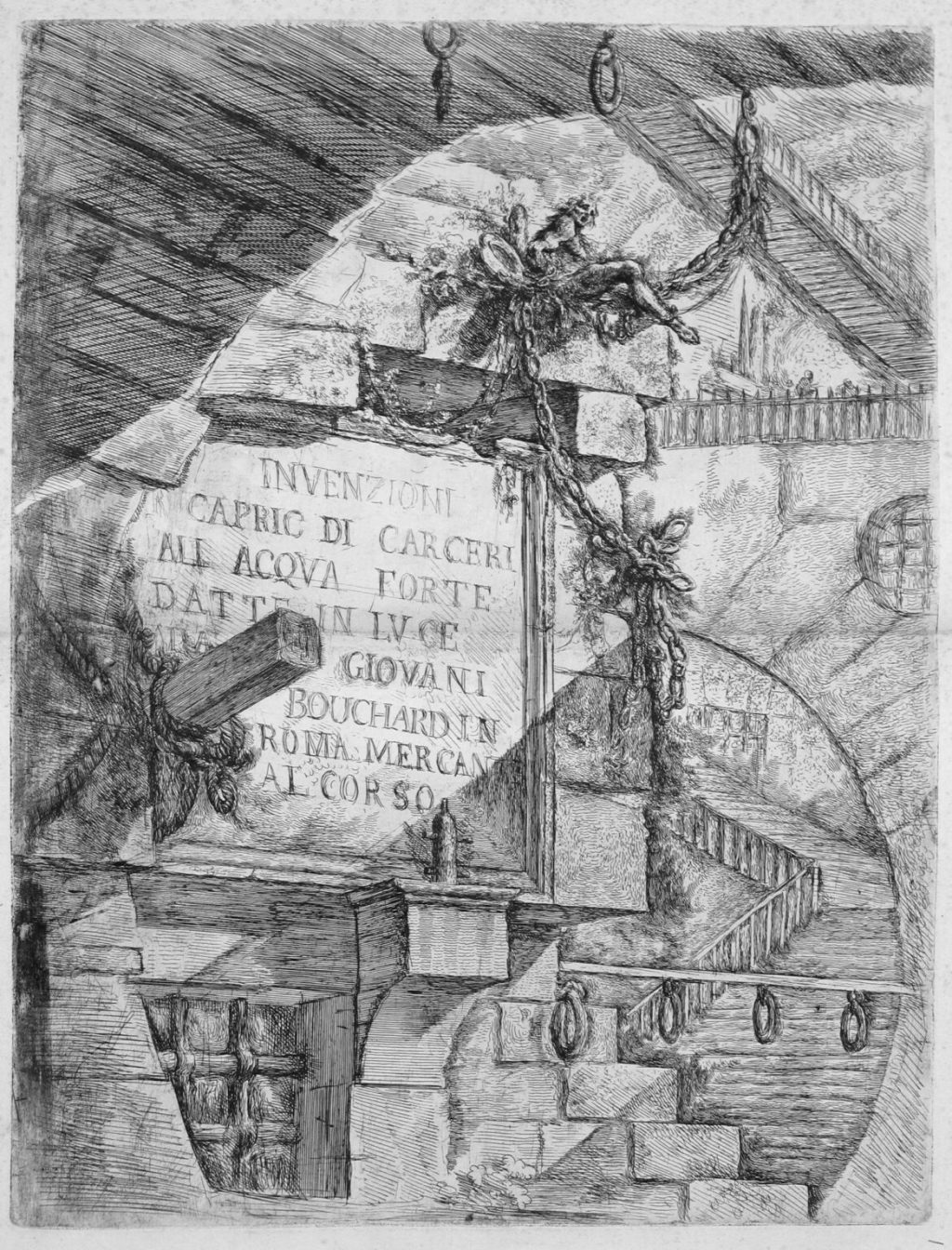
Allow me to say, as I broach the conclusion of this short (as it goes for me) review: the philosophical element to this book should probably be expected. I have not seen too many others point out the following connection, but I assume the title pays homage to Giovanni Battista Piranesi, the architetto himself. Indeed, and without giving too much away, Piranesi (the book) is set in “an infinite series of classical buildings knitted together” (p.179) – an labyrinthine filled with an endless plenitude of classical statuary – very much evoking the sort of imaginative world as captured by G.B. Piranesi’s infinite prisons (below, and see also cover image entitled Le Carceri d’Invenzione, plate I: Title Plate [via WikiMedia Commons]).
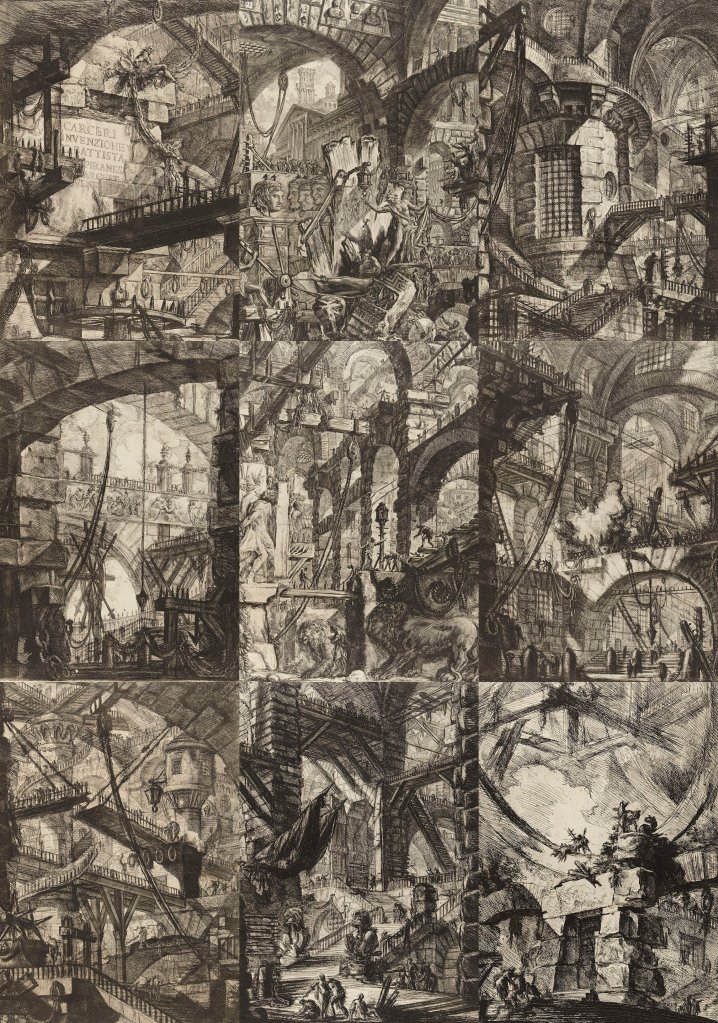
So here we have some of the imagery, the form to which one will find themself immersed, as well as some edges of the content. What are my closing thoughts? I think this is a fantastic book. It comes highly recommended. At just 272 pages, I would say it reads shorter. This pacing also seems to play into the book’s overall enchanting qualities, as the world is quickly immersive and I found myself on the whole not wanting to leave! I am now even more excited to read Clarke’s Jonathan Strange & Mr. Norrell, as it seems clear to me this is an author of great skill, and I am eager to see what she might create given the freedom of 1000+ pages.


 Dialogues at still points